

In this episode of Social Learning Amplified, host Eric Mazur speaks with Alison Cook-Sather—Professor of Education at Bryn Mawr College and founder of the SaLT program—about the transformative power of pedagogical partnership and whole-class co-creation. Together, they explore how sharing responsibility fosters student motivation, agency, belonging, and empathy, particularly in an era where AI makes it easy to outsource learning. Cook-Sather also explains how co-creation can thrive within traditional grading frameworks through self-assessments and course commitment forms, offering a preview of her forthcoming open-access book, Enacting Whole Class Co-creation: Faculty and Student Experiences of Sharing Responsibility in Teaching and Learning.
Eric: Thank you for joining us today for this episode on the power of Pedagogical partnership in the Social Learning Amplified podcast series. I'm your host, Eric Mazur, and our guest on the episode today is Doctor Alison Cook-Sather. Alison is the Mary Katharine Woodworth Professor of Education at Bryn Mawr College and Director of the Teaching and Learning Institute at Bryn Mawr and Haverford Colleges colleges. She is an internationally recognized pioneer in positioning students and teachers as pedagogical partners, most notably through her SaLT program, which has become a global model for institutional change. In case you are wondering, SaLT stands for students as learners and teachers, something that resonates deeply with me as that is at the core of peer instruction and of course, at the core of social learning more generally, which is what this podcast is about. She's a prolific scholar with over 200 publications and 12 books to her name, including Pedagogical Partnerships: A How-To Guide for Faculty, Students, and Academic Developers in Higher Education and Co-Creating Equitable Teaching and Learning. Today, we're getting a preview of her forthcoming open access book from Elon University entitled Enacting Whole-class Co-creation: Faculty and Student Experiences of Sharing Responsibility in Teaching and Learning.
Alison: Thank you so much for having me. It's an honor.
Eric: Well, the honor is mine really, but thank you. Alison, you spent your career advocating for a shift in the traditional power balance in the classroom. And for those who are new to these terms, how do you define pedagogical partnership and co-creation? And how do they differ from, say, just asking for student feedback.
Alison: So first of all pedagogical partnership, my colleagues Cathy Bovill and Peter Felten and I define pedagogical partnership as a collaborative, reciprocal process through which all participants have the opportunity to contribute equally, although not necessarily in the same ways, to curricular or pedagogical conceptualization, decision making, implementation, investigation or analysis. So that's pedagogical partnership. Co-creation I agree with Cathy Bovill, is shared decision making, shared responsibility, and negotiation of teaching and learning. So that typically happens within the classroom. There are ways in which pedagogical partnership can happen within or beyond the classroom, and we can talk about that more if you like. And then third, whole class co-creation involves inviting a whole group of students who are studying together in any teaching setting to actively collaborate and negotiate with the teacher and each other elements of the learning process. And what I want to emphasize about all of these definitions is that none of them requires parties to contribute the same thing or in the same ways. And that's actually key to the definition. It's actually the differences of position and perspective and contribution, and the give and take that happens through those and across those differences that make partnership and co-creation dynamic and generative approaches.
Eric: I can imagine that many faculty members feel a sense of expert anxiety when they hear the word partnership, right? The fear that they're giving up their authority as the subject matter expert, and not just that, a subject matter expert. I mean, based on all of their teaching experience, they probably think they even have an expertise in teaching. In your experience, does partnership actually threaten that expertise, or does it free the instructor to focus on the things that really matter?
Alison: You're exactly right that faculty have that fear. Almost every single faculty member who considers and then starts doing partnership or co-creation begins at a place of uncertainty and fear and worry about their authority being challenged, or that they'll have to do whatever students say, you know, in their teaching. But that's exactly why we emphasize the definitions of partnership and co-creation, that it's about the differences of perspectives. So really partnership and co-creation are about dialog across those differences. They're not about faculty giving up their expertise or their authority or anything else there about faculty engaging in dialog with students who have to have a different perspective than we do, right? Even if we still consider ourselves ongoing learners, we haven't been sitting in the chairs that the students are sitting in as learners right now. And so what happens typically is that while faculty worry about that at first, what they find is the second thing you said, which is as soon as they engage in that kind of dialog and communication across those differences, they gain confidence. They gain a clarity about their practice that actually liberates them and makes them able to be more thoughtful and intentional. And it isn't necessarily about changing what they're doing. Often it's about affirming or clarifying or building on, you know, rather than, oh, here comes a student to tell me how to teach differently. That's really not what this work is about.
Eric: In the age of AI, I sort of started to feel more and more that motivation is more important than ever. No one in their right mind would buy a gym membership and then send a robot to do the workouts. Yet students enroll in universities and are all too happy to, you know, outsource the work that they need to do to a large language model. So my question is, in what way does the practice of partnership and co-creation sort of engage and motivate students both inside and outside the classroom? And maybe a follow up question to that is, I know you have an answer to it yet, but maybe you can answer the two at the same time is what happens to the students’ sense of agency when they're invited into, you know, sort of the engine room of the course design.
Alison: Your second question is actually an answer to the first. There's very very consistent outcomes across studies, both formal studies and also informal observation of partnership and co-creation work. And what students experience is very consistently a deepening of their learning. So they're more motivated to learn within and beyond the classroom, partly because it's a relationship that they have with faculty. Right? It's a connection. It's a human relationship. And so they feel that they can be more present and deepen their learning. Relatedly, they build confidence, right? Because when they're in this kind of dialog, they feel themselves seen and recognized and understood in ways that they might not otherwise. Also, relatedly, this work really nurtures a sense of belonging and mattering, which I see as related, but not exactly the same phenomena where students really they feel as though they're both contributing and they're getting something from this work with faculty that enhances not only their learning, but they're being right. And so a fourth, very consistent outcome is deeper understanding of teachers and teaching and also of students and the differences that students have as learners. So there's incredible empathy that comes from this work where the students say, “Oh, I had no idea faculty care so much or think so hard.” Right? And it contributes to students' sense of their own evolution as active agents in their learning and in others' development. Really, everybody becomes a partner in the learning then because of the raised awareness, because of the collaborative nature of the work and because of the insights that they gain into themselves and one another and into teachers about what goes into teaching and learning, how complicated and relational and unpredictable it is. So it's an incredible sense of agency and empowerment that students experience.
Eric: When I introduced peer instruction in 1991, I noticed that students were much more motivated when they were responsible for each other's learning. And I remember one student saying it stimulates the learning because you're not just at the receiving end, but also at the giving end. And after first wondering about what this student meant, I realized, oh, the act of teaching is a great way of learning. And it's not just that the weaker students benefit at the expense of the stronger students on any given topic. It's a win-win situation. Everybody goes up. So you in a sense, take this even a step further by making the entire class responsible for the teaching. So my question is, and I think I know the answer to that, frankly, based on my own experience with instruction. But I want everybody to hear that. Do you think the shared responsibility makes the learning stickier because it's no longer something being done to the student, but something being built by them?
Alison: Absolutely. I'm sure you know the answer. And the listeners probably know the answer to. But absolutely. And the premises underlying pedagogical partnership that Cathy Bovill and Peter Felten and I identified in our 2014 book were respect, reciprocity, and shared responsibility. Those are the premises of partnership work. And what you're describing there with what that student said is this is the reciprocity. It's the give and take. You both take, you know, in the learning and you give in the teaching. And that more dynamic exchange absolutely makes the learning stick. It makes the relationship matter more. It makes all of it more engaging and more important to everybody involved. And that's whether it's whole class co-creation, where all the students are involved with the instructor in co-creating, or whether it's the kind of pedagogical partnership that has students positioned outside of the classroom. They're not enrolled students, and they work in partnership with faculty to think about a particular classroom that the faculty member wants to focus on. And in all cases, there is much greater engagement in the learning sticks for longer.
Eric: You've consulted on this work in 18 different countries. What excites you the most about this growing global interest in co-creation and in particular, in, in with respect to how it relates to social learning?
Alison: Several things really excite me about this work and have excited me about this work for 20 years. I mean, I'm entering the 20th year of our particular program students as learners and teachers, which is, by the way, a name that the students chose for the program, and student consultant was the name they chose for their role. And what really excites me, and that I see playing out across the globe in different ways, necessarily different ways, which we can talk about is the way that this work can connect people and foster empathy and understanding not only about learning and teaching, but just about humanity, about being humans connected to one another. That's very exciting to me. Relatedly, it breaks down barriers to learning, because when you have those kinds of relationships and when you have the student perspective and forming the faculty perspective in teaching, you have an opportunity for students to be seen and recognized as learners in ways that they might not otherwise. Finally, it affords students structures and spaces and opportunities to be really deeply engaged and empowered, just as we were talking about before. I find that very exciting. And it takes different forms in different locations. Everywhere I go, I bring the premises of partnership, but then I have to be in conversation about the people, in the context, about what does that look like in your context, in your institution, with your population of teachers and students? And those are cultural differences there, institutional differences, and they all matter because these are human relationships. So I'm excited about the ways that this work can connect people and further their development as human beings.
Eric: Well, that must be so incredibly gratifying to see
Alison: It really is.
Eric: We often talk about social learning as a cognitive tool. But you seem to view it also as a tool for equity, you know, by structuring student voices in the curriculum. Are we actually solving a social problem as much as an educational one?
Alison: We could be. There’re a lot of complexities around that. It’s a social challenge, it’s an intellectual one, it’s a structural one. I mean, the ways institutions and education overall are structured is quite hierarchical, so it's asking us to rethink that structure as a more egalitarian, reciprocal kind of structure. But I would absolutely say that the social and the intellectual, or the cognitive and the social, are deeply intertwined in this work. And it’s partly the affective connection that students feel that inspires the deeper cognitive connection.
Eric: So for an instructor who is inspired by your work but feels totally overwhelmed by the idea of sharing responsibility. What advice would you give them about getting started with a partnership or co-creation in their own specific context?
Alison: Yes. My advice is start small, perhaps very small, right? It doesn't make sense to suddenly shift your paradigm completely from whatever it is you've been doing and that students are more accustomed to, which is more of a delivery model. It's less active despite your work, you know? I mean, people still really fall back onto a much more passive model. So I would advise trust enough to take the risk of trying these approaches out, explore conceptions of partnership and co-creation, but don't be bound by them, because these are practices that are still evolving and they are very context specific. There's no one size fits all for this work. So really taking the work that's been done, but recognizing there's still more to do that we haven't thought of and start small, develop a range of approaches. Maybe it's just an assignment, maybe it's just an activity in class, something that is bounded and that doesn't feel like it's going to take over your teaching life. You know, if you commit to it, I would say start small and really be prepared for doubt and trepidation and resistance from students and from yourself. You will feel it in yourself and really lean into unfinishedness. I would say it's an ongoing process.
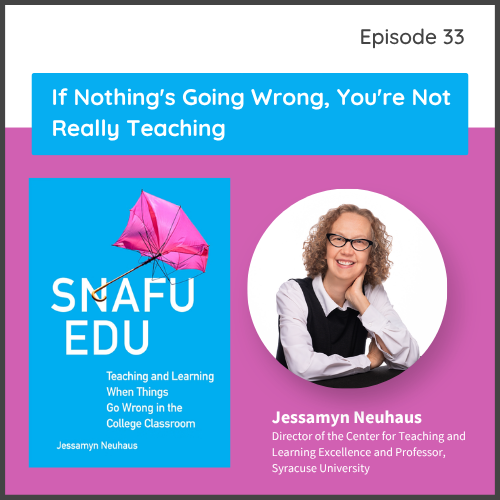
Eric: I recently moved after some 40 years of dabbling in social learning towards ungrading because I felt that the traditional grading system was sort of the ultimate wall between me and my students. So my question is, can co-creation truly exist in a traditional high stakes grading environment, or do we have to—I don't know if you're familiar with Jessamyn Neuhaus’ work—do we have to answer un-Snafu our assessment systems before you can have a real partnership? Because in a sense, there is sort of this ambiguity in an instructor between being on one hand, the coach and on the other hand, the judge.
Alison: I think that co-creation can exist within the grading system. We do it in our context. Many people I know do it. I use something called a course commitment form, which has all of the course assignments, and it has, percentages between say, 20 and 40 or between 10 and 20 that students can choose to assign to different components of the course. And then they grade themselves actually. And we're in conversation about that. So I provide the structure, I provide some guidance. And we're in ongoing dialog about how they're going to be assessed and evaluated. And they have a major role in that. So there's co-creation in the assessment in the formative assessment. And then there's co-creation in the summit of assessment, where we decide together what their grade is going to be. So while I'm all in favor of ungraded, it is possible to do co-creation within a graded system.
Eric: Actually, I feel, this year that I ventured into ungraded, that in a sense, was having the students propose a grade for themselves and provide the evidence for it, there's actually a perfect example of using students not only as partners in teaching and a partner in learning, but also a partner in assessment, a particularly self-assessment. Which is so important because throughout yourself, you're not being assessed by others. You have to assess yourself in order to continue to grow.
Alison: Absolutely. And that self-assessment links back to everything we've talked about here so far. There's deeper engagement, right? There's more thought that has to go into the learning. There's greater intentionality there. There's so many ways that inviting students to be partners in every dimension of teaching and learning will deepen their engagement and again, enhance both their social and their cognitive development.
Eric: Your upcoming book focuses on whole class co-creation. What was the inspiration for focusing on the entire class, rather than just a few selected student partners?
Alison: So the impetus was that I've been researching co-creation and pedagogical partnership for decades. I've been practicing it largely in the arena of having student partners who are not enrolled in the course work in partnership with faculty to reflect on their teaching. And so I thought it was finally time that I entirely co-create a course with students and have every aspect of the course be enacted through co-creation. Even after 20 years of doing this kind of work and doing components of co-creation, I was afraid. I was worried about doing this, worried that it wouldn't work, worried that people would judge me for doing this and that I wasn't doing my job. But I decided I would just finally take the risk and do it and have the entire class be co-created. And then after I taught the course, I was so inspired by what students wrote about their experiences that I decided I had to write a book about it. And 15 students from the course contributed to the book. Much of their writing from throughout the semester is woven into the book, where they talk about their experience of co-creating every dimension of the course.
Eric: Right. That's just absolutely wonderful. As an author, what are you most looking forward to seeing when you have that window into the thinking of educators, where you see them sort of annotate your own reading and see their thinking revealed.
Alison: I'm most excited about, what we call in one of my partnership books, Threshold Concepts, borrowing that idea from economics. The idea that there are these thresholds that if you don't pass over them, you really can't engage deeply or, you know, or you're learning kind of stops at that threshold. And there are many thresholds to this work. And what I see in conversation with faculty is they get to the threshold. They think, oh, I don't want to do something where students are going to tell me what to do, and they wrestle with it for a minute and then they cross it. And so I'm most excited about those moments when faculty experience really the liberation of recognizing the potential of this work, that it isn't going to constrain them or dictate what they need to do, but rather that it's going to liberate them and connect them more with their students and open up all kinds of possibilities for learning. And I love that moment when that moment when people realize, oh, it can actually really help me to do this kind of work.
Eric: Exactly It's all about the ah-ha moments, from peer instruction to managing in the time of AI, we should absolutely work on not losing the ah-ha moments. So, Alison, thank you for this. It's a powerful reminder that we don't have to carry the entire weight of the classroom on our own shoulders. I would like to conclude by thanking our audience for listening and inviting everyone to return for our next episode. On behalf of all our listeners, Alison, thank you again for joining us today.
Alison: Thank you so much for having me. It's been a pleasure.
Eric: You can find Allison's work and updates on her forthcoming book Enacting Whole-class Co-creation: Faculty and Student Experiences of Sharing Responsibility in Teaching and Learning at alisoncooksather.com. To find our Social Learning Amplified podcast and more: go to perusall.com/sociallearningamplified. Subscribe to find out about our upcoming episodes, and I hope to welcome you back on a future episode.